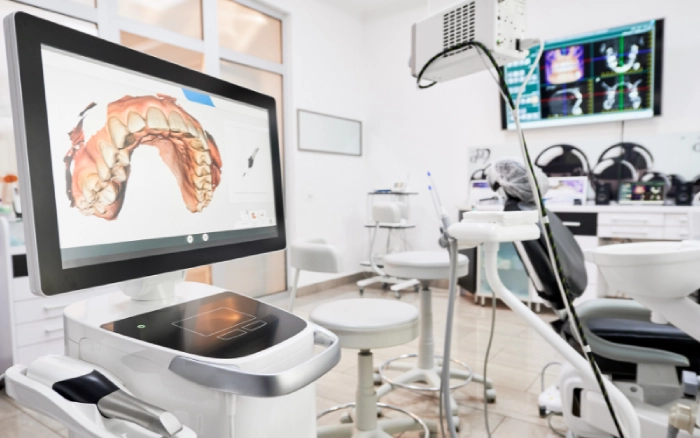
When considering dental implants, precision and accuracy are crucial for a successful outcome. This is where 3D imaging for dental implants in Bradenton revolutionizes the process. Unlike traditional methods, this advanced dental technology uses digital implant mapping and dental CT scans to offer a detailed view of the patient’s oral structure.
In this article, we’ll explore how 3D imaging enhances implant placement precision, improves safety, and ensures better overall results. If you’re planning a dental implant procedure, this guide will show you why 3D dental technology is essential.
What Is 3D Imaging for Dental Implants?
3D imaging for dental implants is a cutting-edge technology that creates a three-dimensional model of your mouth using dental CT scans. This detailed view allows dentists to see your jawbone, teeth, and surrounding structures clearly. By offering a comprehensive oral health imaging solution, it helps with pre-surgical assessments, bone density analysis, and identifying potential risks. Ultimately, this technology enables guided implant surgery and ensures implant placement precision, leading to improved implant outcomes and a higher dental implant success rate.
Benefits of 3D Imaging for Dental Implants in Bradenton
With advances in 3D dental technology, patients in Bradenton can now enjoy safer, more accurate, and successful dental implant procedures. Here are seven key benefits that highlight how this technology transforms the implant process:

1. Enhanced Accuracy in Implant Placement
By utilizing 3D imaging for dental implants, dentists achieve implant placement precision that is unmatched by traditional methods. The digital model created by dental CT scans provides a clear, comprehensive view of the jaw, teeth, and surrounding tissues. This level of detail allows for pinpoint accuracy in placing the implant, reducing the chances of errors and increasing the likelihood of successful implant outcomes.
2. Bone Density Analysis for Better Planning
3D imaging helps in bone density analysis, which is crucial in determining if a patient has enough bone to support an implant. This ensures that implants are placed in areas with adequate bone support, preventing complications and the need for bone grafting. As a result, the implant procedure becomes safer, quicker, and less invasive, leading to a smoother recovery process.
3. Minimally Invasive Dentistry
Thanks to 3D imaging, guided implant surgery has become more precise and less invasive. Dentists can plan the surgery down to the smallest detail, avoiding unnecessary cuts and reducing trauma to the surrounding tissues. This means fewer stitches, less pain, and a shorter recovery time for patients, making the entire experience more comfortable and efficient.
4. Improved Implant Outcomes
Using digital implant mapping, dentists can predict how the final result will look and feel, leading to improved implant outcomes. This foresight ensures that the implants are not only securely placed but also align perfectly with the patient’s existing teeth, enhancing both aesthetics and functionality. Patients can expect a more natural look and a better overall experience.
5. Increased Implant Procedure Safety
Safety is a top priority in any surgical procedure, and 3D imaging enhances this by allowing for a thorough pre-surgical assessment. Dentists can identify potential risks, such as nerve proximity or sinus issues, before the surgery begins. This proactive approach minimizes complications and ensures that every step of the procedure is carefully planned and executed, increasing overall safety.
6. Patient-Specific Implants for Personalized Care
Every patient’s mouth is unique, and 3D imaging allows for the creation of patient-specific implants tailored to individual needs. This personalized approach ensures that the implant fits perfectly, providing better support and comfort. By catering to the specific anatomy of each patient, this advanced technology enhances the success and longevity of dental implants.
7. Alternative to Traditional Dental X-Rays
Traditional dental X-rays provide a two-dimensional view, which can sometimes miss critical details. 3D dental technology offers a more comprehensive alternative, capturing the full structure of the jaw and teeth in a single scan. This eliminates guesswork and ensures that no detail is overlooked, leading to better diagnosis, planning, and surgical accuracy.
Frequently Asked Questions
What is 3D imaging for dental implants?
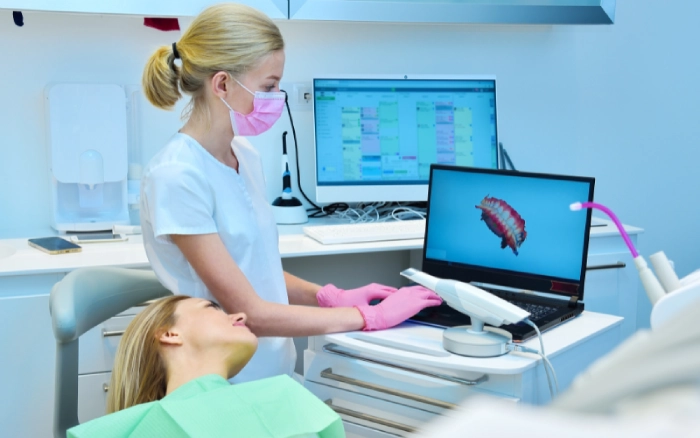
3D imaging is advanced dental technology that creates a detailed, three-dimensional view of your teeth, jawbone, nerves, and surrounding structures. It helps the dentist plan dental implant placement more safely and accurately.
Why is 3D imaging important for dental implants?
3D imaging helps the dentist see exactly where the implant should go. It reduces guesswork, improves accuracy, protects nearby nerves and sinuses, and helps create a safer treatment plan.
How does 3D imaging improve dental implant accuracy?
It gives the dentist a complete 3D map of your jaw. This allows the implant to be placed at the right angle, depth, and position for better stability and long-term success.
Is 3D imaging safe?
Yes. Dental 3D imaging is considered safe and uses a lower amount of radiation than a traditional medical CT scan. It is a quick and effective tool for planning implant treatment.
What is the difference between a regular X-ray and a 3D scan?
A regular X-ray is a flat, two-dimensional image. A 3D scan shows your mouth from multiple angles, giving the dentist a much clearer view of bone, nerves, sinuses, and tooth structure.
Does every dental implant patient need a 3D scan?
For most implant cases, a 3D scan is strongly recommended. It gives the dentist important details needed to plan the safest and most accurate implant placement.
How does a dental CT scan check bone density?
A dental CT scan measures the height, width, and density of your jawbone. This helps the dentist determine whether your bone is strong enough to support a dental implant.
Can 3D imaging help if I was told I do not have enough bone for an implant?
Yes. A 3D scan can sometimes reveal areas of healthy bone that a regular X-ray may not show. It can also help determine whether a bone graft or another treatment option is needed.
Can 3D imaging reduce recovery time?
Yes, it may help. Because 3D imaging allows for more precise and minimally invasive planning, there may be less tissue trauma, which can support a smoother and more comfortable recovery.
Does 3D imaging make implant surgery safer?
Yes. It helps the dentist identify important structures like nerves and sinuses before surgery. This reduces the risk of complications and helps make the procedure safer.
Conclusion
3D imaging is transforming the way dental implants are placed, offering unparalleled accuracy, safety, and patient-specific solutions. From bone density analysis to minimally invasive dentistry, this technology is revolutionizing the dental implant process in Bradenton.
At Parkwood Dental, we offer expert dental implant services to restore your smile and improve your oral health. We proudly serve both English and Spanish-speaking clients, ensuring everyone receives the highest level of care. Contact us today to schedule your consultation and begin your journey to a healthier smile.
⬇️ Parkwood Dental EAST office located at 8495 Heritage Green Way #108, Bradenton, FL 34212 ⬇️
⬇️ Parkwood Dental WEST office located at 2620 48th Ave W, Bradenton, FL 34207 ⬇️